Overgrown Trees Removed Without Damaging Structures
Tree Cutting in Spartanburg for properties with damaged, leaning, or space-invasive trees
Trees planted too close to foundations eventually push roots under slabs and driveways, or they grow tall enough that limbs scrape siding during wind. M&A Tree Service handles tree cutting for residential and commercial properties in Spartanburg where trees have been damaged by storms, are leaning toward buildings, or have simply outgrown their location. Cutting projects are planned to drop sections in controlled directions using ropes and mechanical advantage, keeping falling wood away from structures, vehicles, and neighboring yards.
The process involves assessing lean direction, weight distribution, and nearby obstacles before making cuts that allow the operator to direct each section's descent. Large trunks are often cut in segments from top to bottom when clearance is tight, preventing the full tree from falling as a single piece and causing impact damage.
Request a detailed estimate that explains the cutting approach and site-specific safety measures based on your property layout.
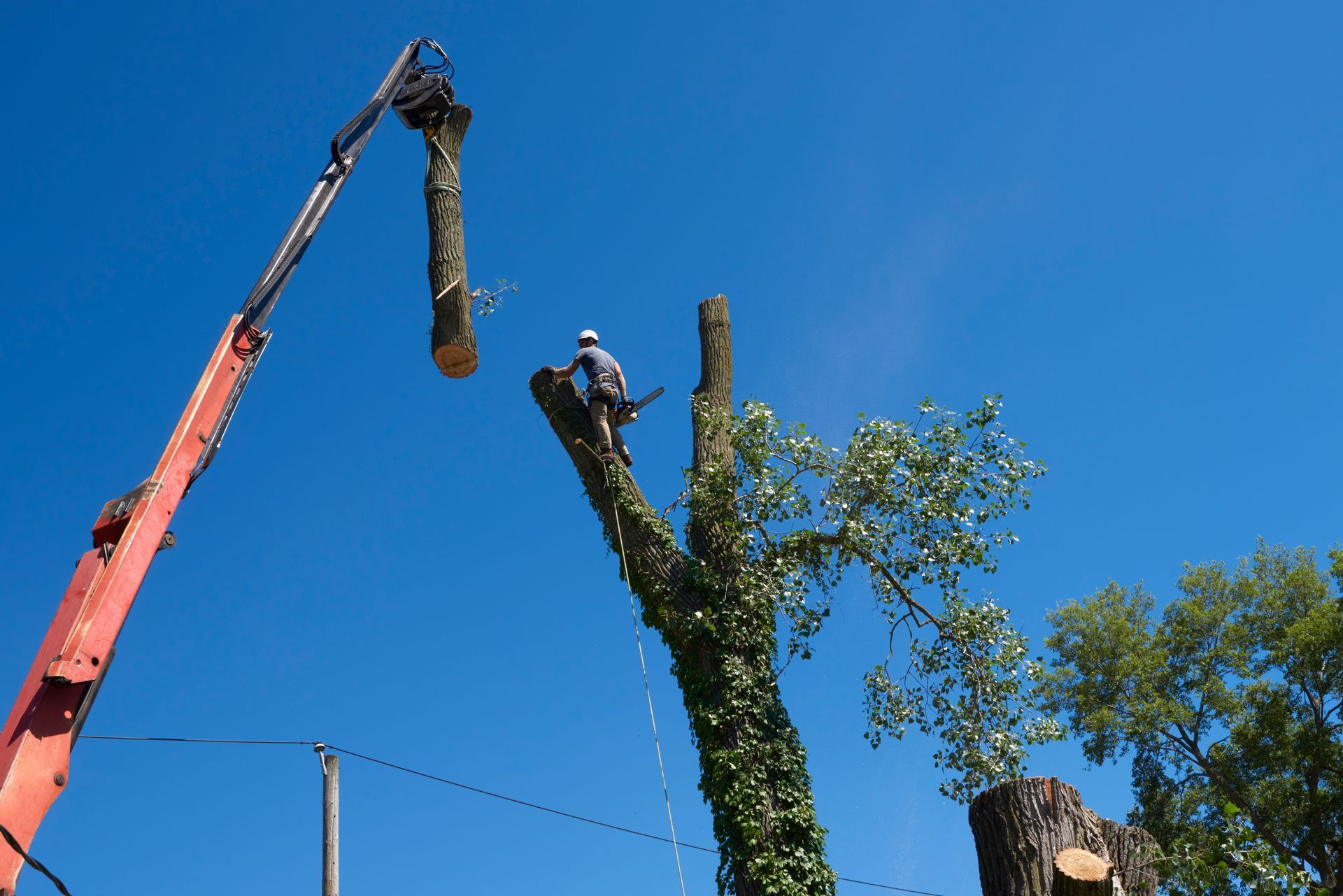
Why Controlled Cutting Works for Tight Spaces
Tree cutting requires planning each cut so the tree comes down in sections that fit the available space. Operators notch trunks to control hinge points, use wedges to guide lean, and secure upper sections with rigging lines before cutting them free. This prevents uncontrolled falls that damage roofs, crush shrubs, or land on parked equipment.
Once the tree is down, the stump sits at ground level or slightly above, roots no longer lift pavement, and branches no longer block light or drop leaves into gutters. The area where the tree stood becomes available for replanting with a smaller species, expanding lawn space, or installing hardscaping like patios or walkways.
Cutting services can be combined with stump grinding to remove the remaining root mass and hauling to clear all debris from the site in a single visit. Projects are scheduled around weather and property access, with larger trees requiring dry ground for equipment positioning and smaller jobs completed quickly when conditions allow.
Common Questions About This Service
Property owners typically want to understand the cutting process, timing considerations, and what happens to the tree afterward.
How is cutting done safely near power lines or structures?
Crews use rigging systems to lower cut sections along predetermined paths, avoiding contact with lines and roofs, and notify utility companies when trees grow within minimum clearance distances established by local codes.
What happens to the wood and debris after cutting?
Trunks are cut into firewood-length rounds if requested, otherwise hauled away with branches and foliage, leaving the property free of cuttings and ready for the next phase of landscaping or construction.
When is the best time to schedule tree cutting in Spartanburg?
Late fall through early spring offers easier access because ground is firmer, insects are less active, and visibility through bare canopies allows better assessment of structure and rigging points.
What factors affect the cost of tree cutting?
Height, trunk diameter, proximity to structures, accessibility for equipment, and whether the tree is leaning or entangled with other vegetation all influence labor time and the complexity of rigging required.
How do operators prevent damage to lawns and driveways during cutting?
Equipment weight is distributed across mats or planks when ground is soft, and drop zones are cleared of furniture, decorations, and vehicles before work begins to eliminate obstacles.
M&A Tree Service offers free site evaluations to determine the safest cutting method for your specific property conditions. Contact (864) 381-4209 to review your tree situation and receive a written estimate that outlines equipment needs and project timeline.